Survey finds many Wisconsin residents struggle with personal finances, inflation
 With the new year, millions of people resolve to diet, exercise more, or make changes in other aspects of their lives, including personal finances. For most of us, personal finance-related resolutions are a combination of spending less, saving more, and maybe paying off some debts. Some of the newfound attention to our financial outlook may even stem from an expensive holiday season that just wrapped up. But the new year offers new opportunities to get on track.
Going into 2024, financial resolutions were likely popular across the state. After several years of inflation, finances remain a major concern for Wisconsinites. This comes from a new survey effort at UW–Madison’s Survey Center called WisconSays, which is a new panel of nearly 4,000 people answering regular survey questions. These data are from the very first wave of that survey. We are calling this collaboration the WisconSays/La Follette Survey. These data offer insights into how people are feeling about a range of public policy issues that could be especially important during an election year. Using this information, the La Follette School of Public Affairs and the Milwaukee Journal Sentinel are partnering to share some key findings around critical issues of the day throughout 2024.
Majority of Wisconsin residents say inflation is a big problem
A topic that is always on people’s minds: their pocketbooks. Despite persistent inflation, 2023 was not a bad year economically overall for Wisconsinites. The state’s unemployment rate is low, and wages are rising. But since they are growing at a slower rate than in the US overall, it comes as no surprise that inflation remains a major concern here.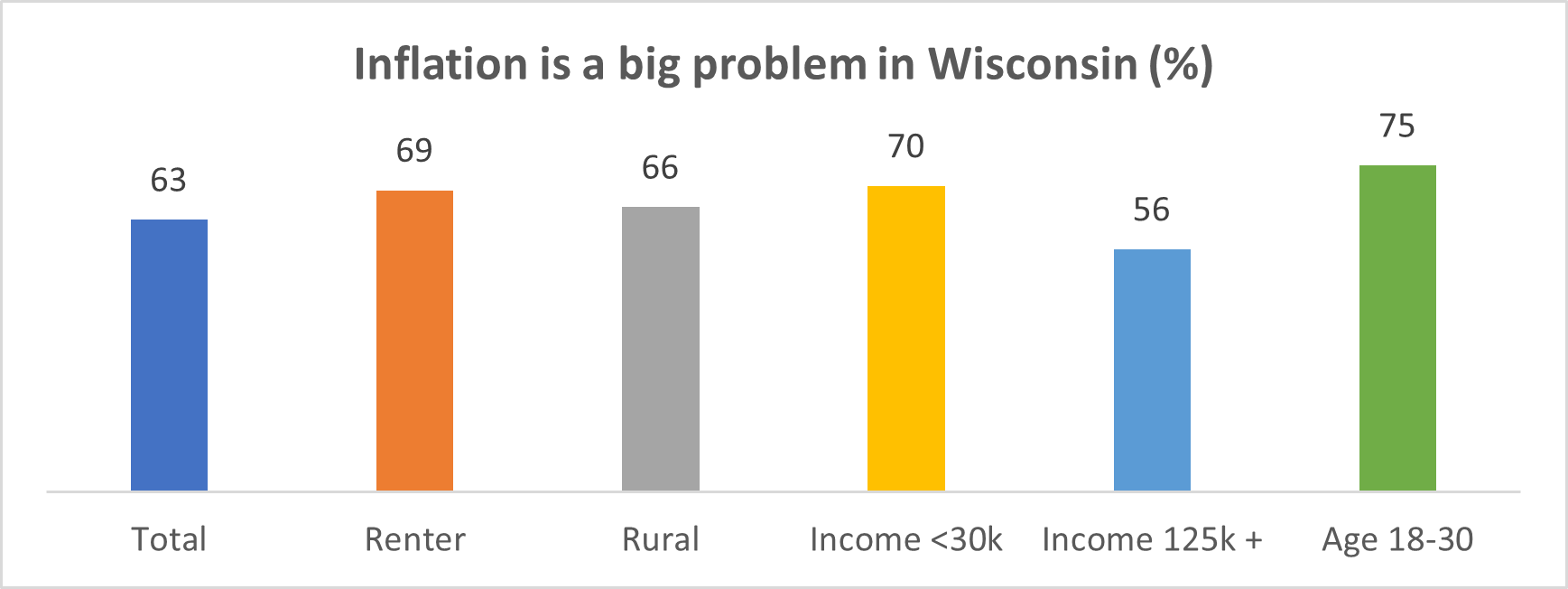
A majority of people in Wisconsin, 63%, said inflation was “quite a problem” or an “extremely big problem” in the state, according to a fall 2023 survey of 3,550 people by the University of Wisconsin–Madison’s Survey Center.
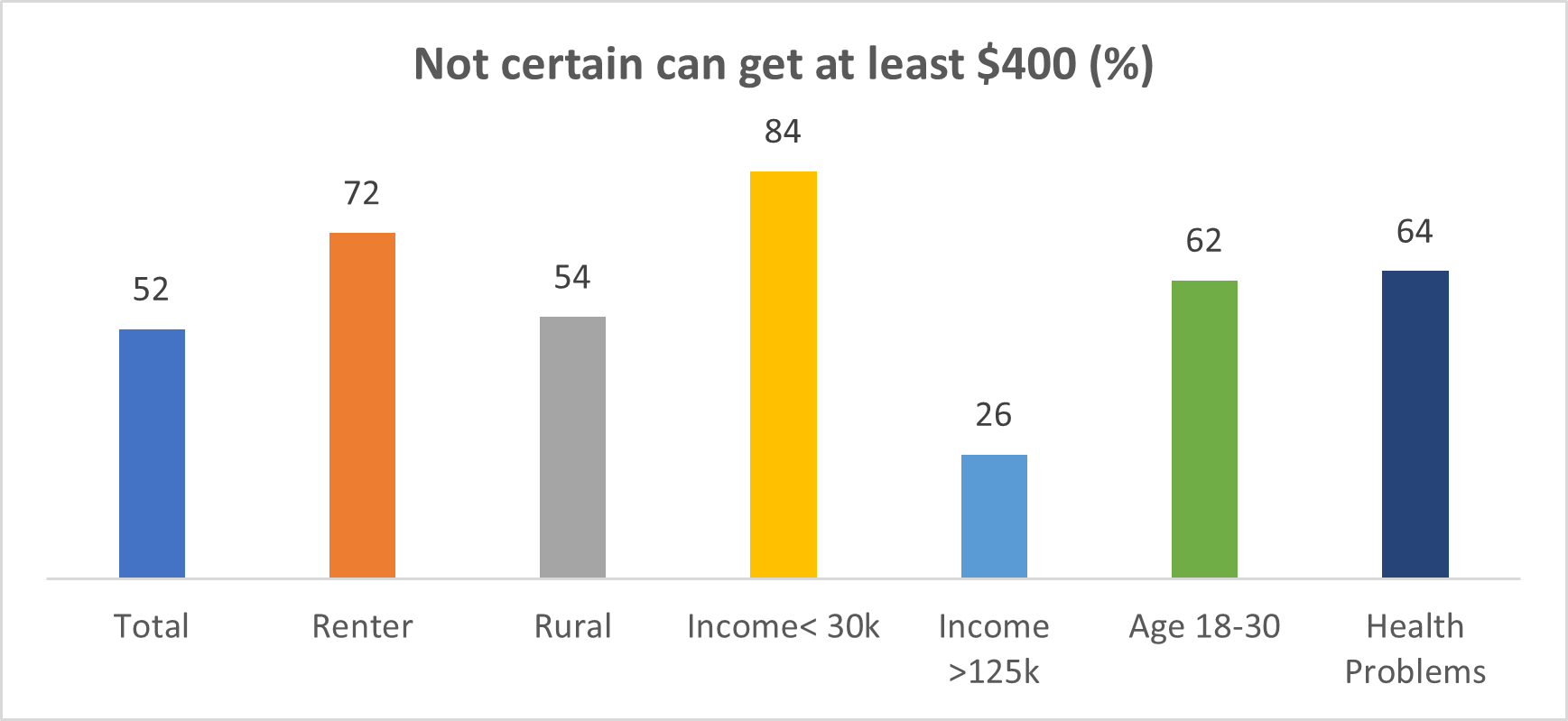
53% of people in the state are not certain they can find $400 in an emergency according to a fall 2023 survey of 3,550 people by the University of Wisconsin–Madison’s Survey Center. The rate of not having access to money in an emergency is higher among renters at 72%.
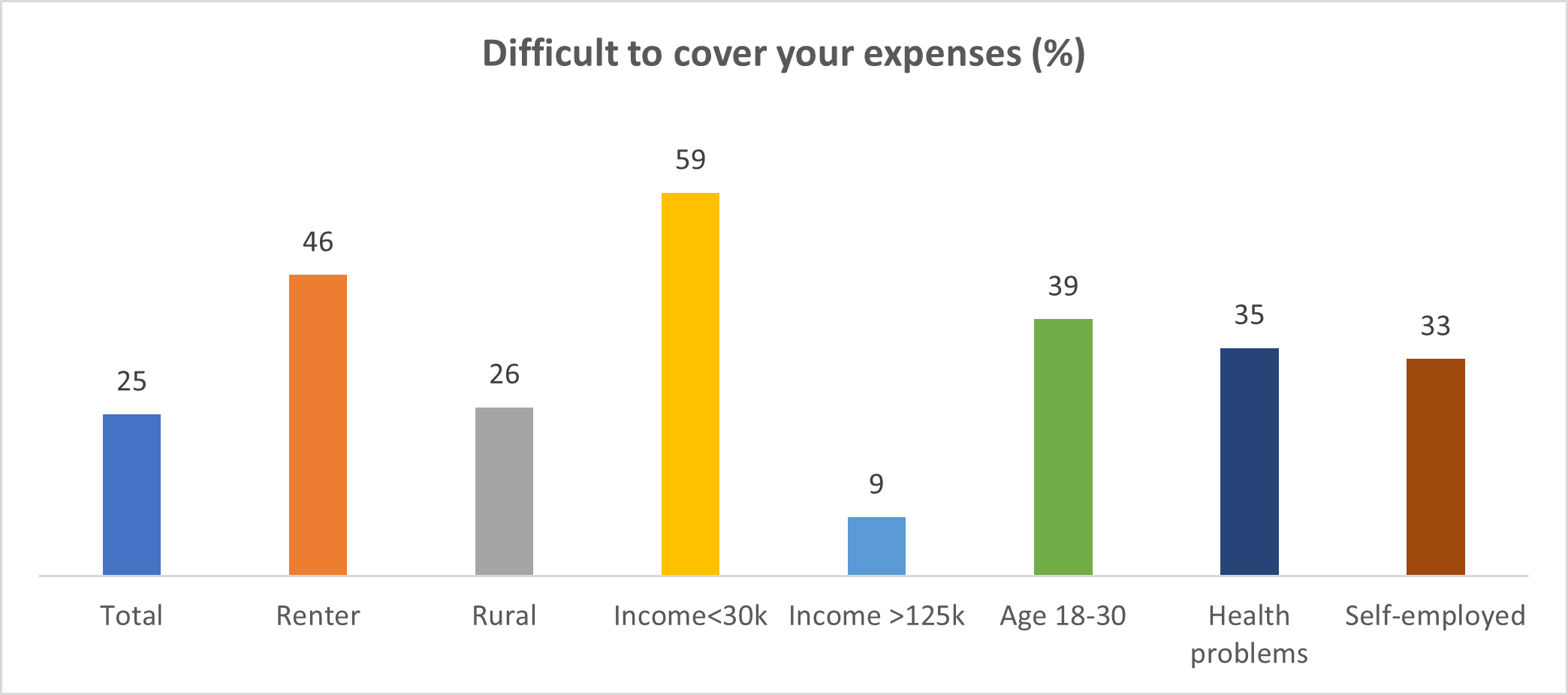
One in four Wisconsinites say they are having difficulties paying their basic expenses, according to a fall 2023 survey of 3,550 people by the University of Wisconsin–Madison’s Survey Center.
Access to retirement savings plans at work limited for some
Yet, according to a 2021 FINRA survey, just over half (57%) of people in Wisconsin have access to retirement savings plans at work, although just 41% of people making less than $50,000 do. Expanding access to workplace and individual savings remains an important challenge for our state. At least 16 other states have created retirement savings plans for workers who lack employer-based plans, often combined with automatic enrollment in savings plans. The Wisconsin legislature is already considering provisions to expand access to college savings at work, which is a welcome step. Other states offer tax credits to small businesses to set up savings plans, reducing the barriers to offering savings options at work. These efforts will especially benefit young people that the state of Wisconsin needs to retain in the face of an aging population.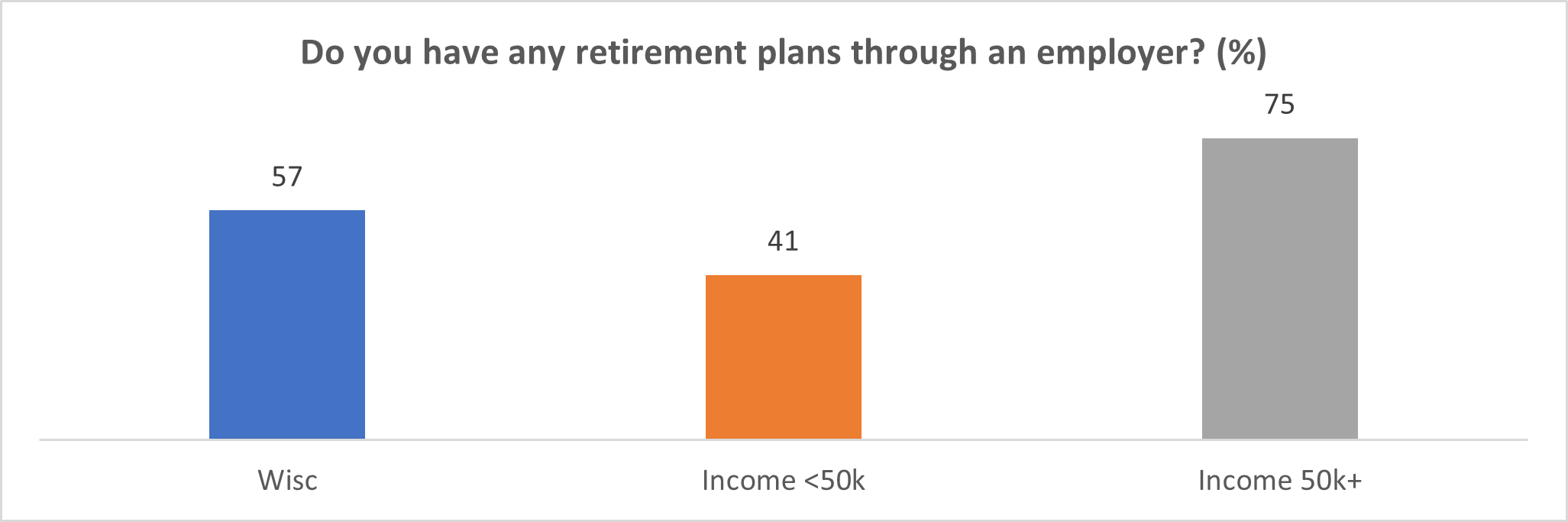
Only 41% of Wisconsin residents report having access to a retirement plan through their employer according to a fall 2023 survey of 3,550 people by the University of Wisconsin–Madison’s Survey Center.