New faculty Q&A — Tony Lo Sasso
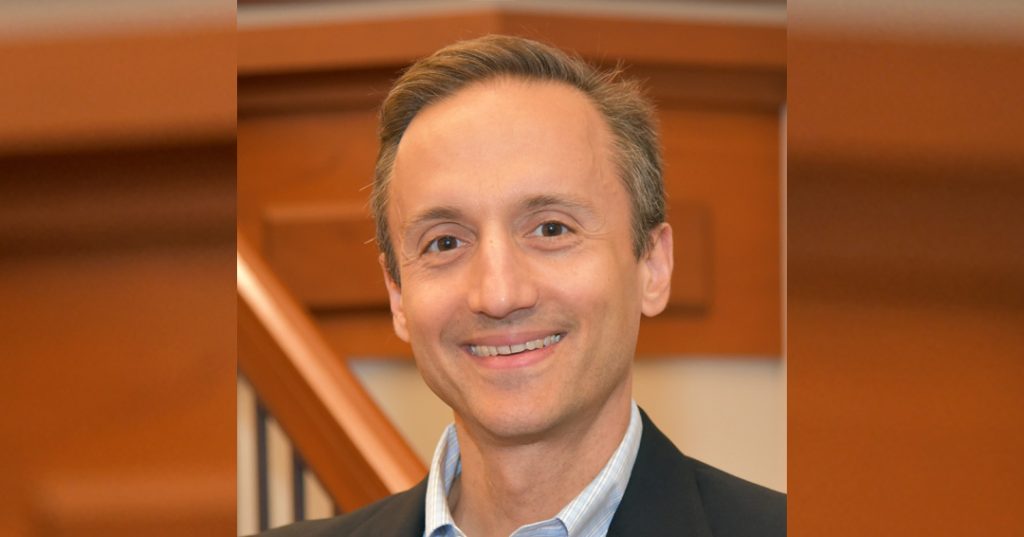
Hometown
Chicago
Educational/professional background
PhD Economics, Indiana University
Previous position
Professor, DePaul University Department of Economics
What types of questions do you address in your research?
My research focuses on how health care markets and public policies shape costs, access, and quality in the U.S. health care system. I study how insurers, hospitals, physicians, pharmaceutical firms, and intermediaries such as brokers and pharmacy benefit managers respond to incentives created by regulation and payment policy, and how those responses affect consumers and taxpayers. Much of my work uses large administrative datasets and quasi-experimental methods to evaluate the real-world effects of policy changes in practice.
How did you get interested in this field?
I became interested in health economics while working on my dissertation over 30 years ago, during a period when health care reform was very much at the center of public debate. What drew me to the field then—and has kept me engaged ever since—was the combination of rigorous, data-driven economic analysis and direct relevance to real policy questions. Health care offers a setting where standard economic tools can be applied to some of society’s most important and contested issues, and where empirical evidence has the potential to meaningfully inform policy decisions.
What attracted you to the La Follette School?
I have long admired La Follette’s tradition of close collaboration between faculty and policymakers, particularly its strong relationships with staff in Wisconsin state agencies such as Medicaid. The school’s emphasis on rigorous analysis that is directly engaged with real policy design and implementation aligns closely with how I approach my own research and teaching.
How does your research intersect with policymaking?
My research is designed to inform policy choices by evaluating how real-world health care markets respond to regulation and public programs. I regularly engage with policymakers and agency staff to assess the intended and unintended effects of policy changes, and my work has led to invitations to provide testimony before Congress and state legislatures. Using empirical evidence, I aim to clarify tradeoffs among cost, access, and quality so that decision-makers can improve policy design and implementation.
What is your approach to teaching?
My approach to teaching emphasizes helping students learn how to reason clearly and think critically about policy problems in settings where evidence is imperfect and tradeoffs are unavoidable. Rather than presenting policy debates as settled or purely technical, I focus on how economists frame questions, assess data and study design limitations, and evaluate competing explanations. I encourage students to engage with real policy problems, interpret empirical results critically, and understand how analytical choices shape conclusions. The goal is to equip them with durable analytical and critical thinking skills they can apply across policy domains.
What’s something interesting about your area of expertise that you’re excited to share with students?
Economists often say that incentives matter—and even in health care, they really do. For example, in my experience, physicians rarely describe their decisions as being driven by payment policy. Yet when you look at the data, you consistently see them respond to how care is paid for. I enjoy helping students reconcile that tension, and understand how incentives operate subtly through systems and institutions rather than through conscious individual decision-making.
What are you reading/watching currently?
I recently started Polostan by Neal Stephenson, one of my favorite authors. Stephenson is best known for science fiction, but he also writes intricate historical fiction, and Polostan falls squarely in that tradition. I enjoy work that combines deep research with ambitious storytelling, and his books are a treasure.
Hobbies/other interests
Outside of work, I enjoy running, cycling, and lifting. I am also a proud adult fan of LEGO, and find that building complex sets scratches the same analytical itch as my professional work.