La Follette Makes a Mark at UW Day at the Capitol
When graduate students and faculty from the La Follette School of Public Affairs arrived at the Wisconsin State Capitol this spring, they came prepared to talk about issues important to policymakers.
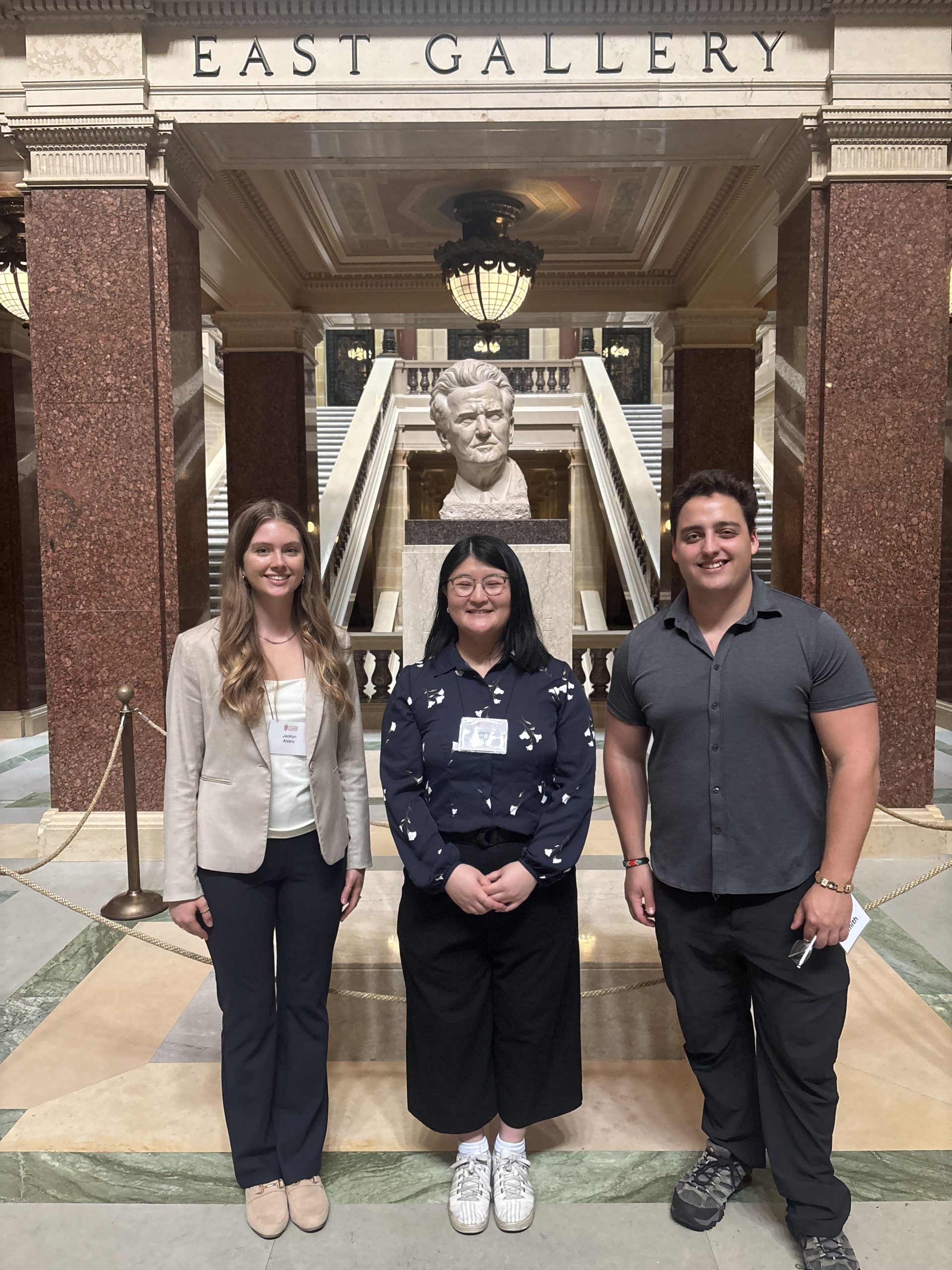
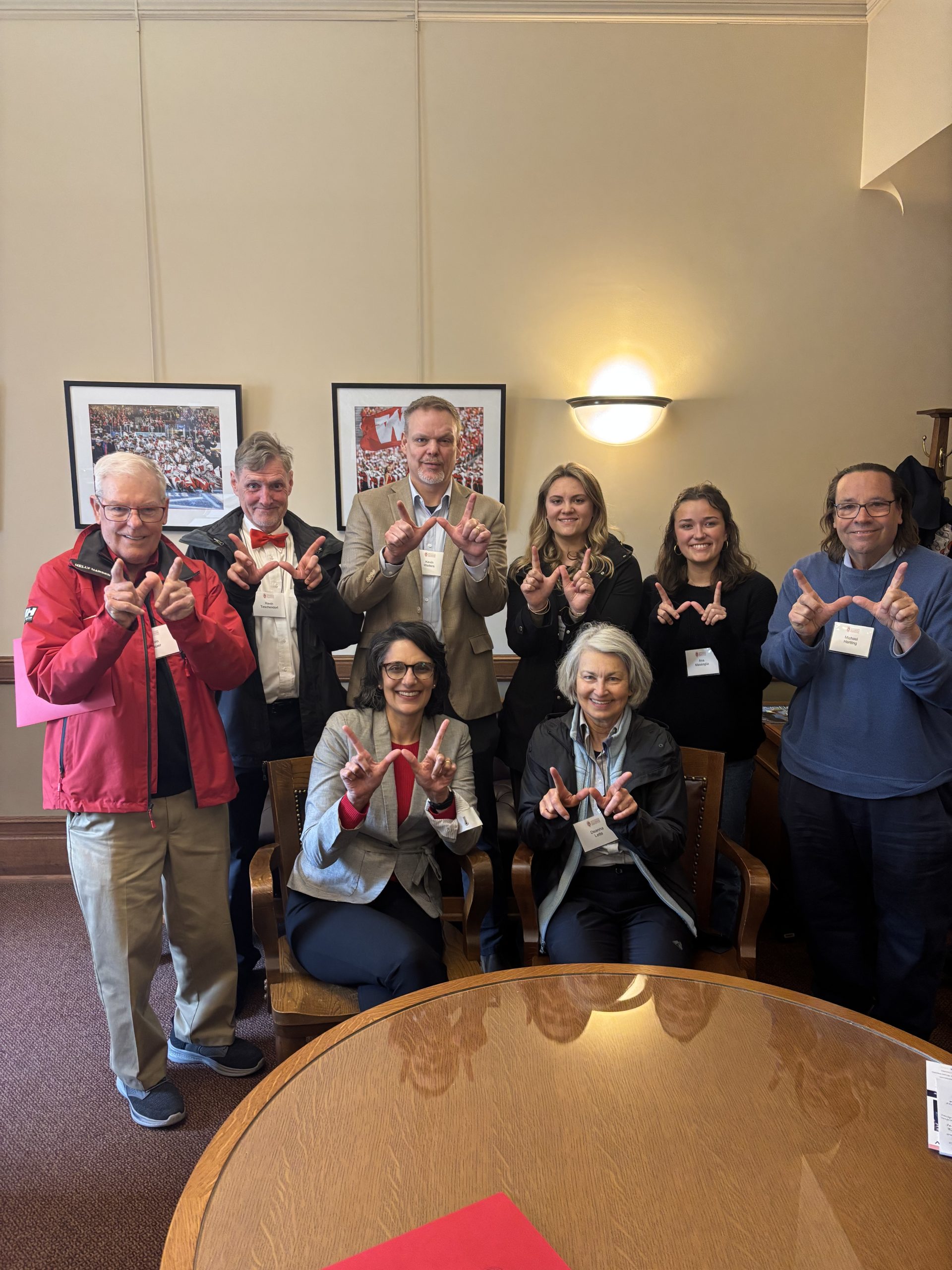
UW–Madison Day at the Capitol is an annual event highlighting the university’s contributions to the state, and La Follette work is consistently featured through flash talks, graduate student research and meetings with legislators. La Follette’s presence helps highlight the issues facing Wisconsinites. It also shows that researchers are working on these pressing issues and want legislators in the room to help tackle them.
La Follette Professor J. Michael Collins delivered a Faculty Flash Talk titled Assessing the Credit Consequences of Justice Involvement, presenting research on a problem that touches roughly one in five Wisconsin residents.
Using matched Wisconsin administrative data and credit reports spanning 2018 to 2024, covering 38,000 incarcerated individuals and 53,000 family members, Collins found that people entering the justice system already carry poor credit scores, or don’t know much about credit at all. These scores worsen during incarceration and never fully recover after release. The window of greatest need, Collins found, is the first two years after release.
The research suggests the need for concrete policy interventions including financial literacy programs, credit builder initiatives, and community-based strategies that could reduce recidivism by addressing the financial instability that often drives it.
La Follette students were also delivering presentations at the Graduate Research Showcase, highlighting their work on complex problems facing Wisconsin.
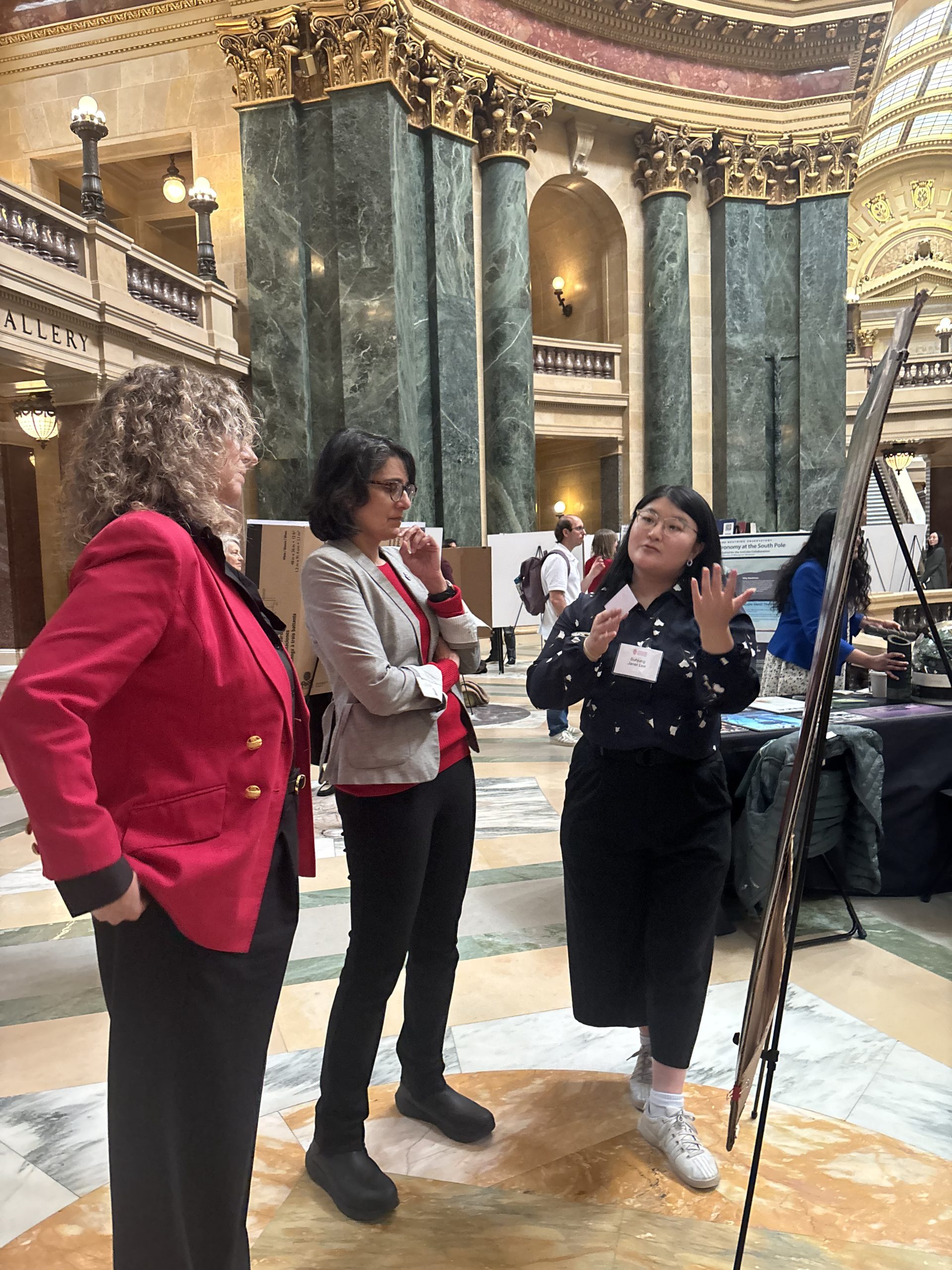
Suhjung Janet Lee framed her research on opioid vaccines for opioid use disorder as a “wicked problem.” Government agencies are funding the development of vaccines that target specific opioid molecules to help assist with current treatments for opioid use disorder, but Lee argues that getting the science right is only part of the challenge.
Lessons from HPV vaccine rollouts and existing opioid treatment stigma suggest that how a technology is introduced matters as much as what it does. Lee proposes three strategies including prescriptive value framing, building democratic capacity through deliberation, and responsible innovation and inclusion to minimize unintended harms before these vaccines reach the market in the next decade.
Her La Follette training, she said, shaped how she approached the research and presented it to a wide audience.
“What I appreciate from La Follette is understanding who’s involved. My education helped me gain stakeholder training to contextualize these real situations, who they affect, and who should be kept in mind,” Lee said.
Connor Smith brought a different kind of emerging technology to the Capitol: gene drives. A relatively new biotechnology, gene drives can manufacture a genetic trait to be inherited nearly 100 percent of the time, making them powerful tools for controlling species populations, and potentially dangerous ones if they spread beyond their intended targets.
Smith examined how existing federal regulatory structures fall short in preventing these unintended consequences. The regulatory process, he found, is dense and often counterintuitive, and enforcement gaps go unnoticed as a result. The bureaucracy, he argued, has the capacity to regulate emerging biotechnologies safely, but only if agencies build a culture of policy that evolves alongside science.
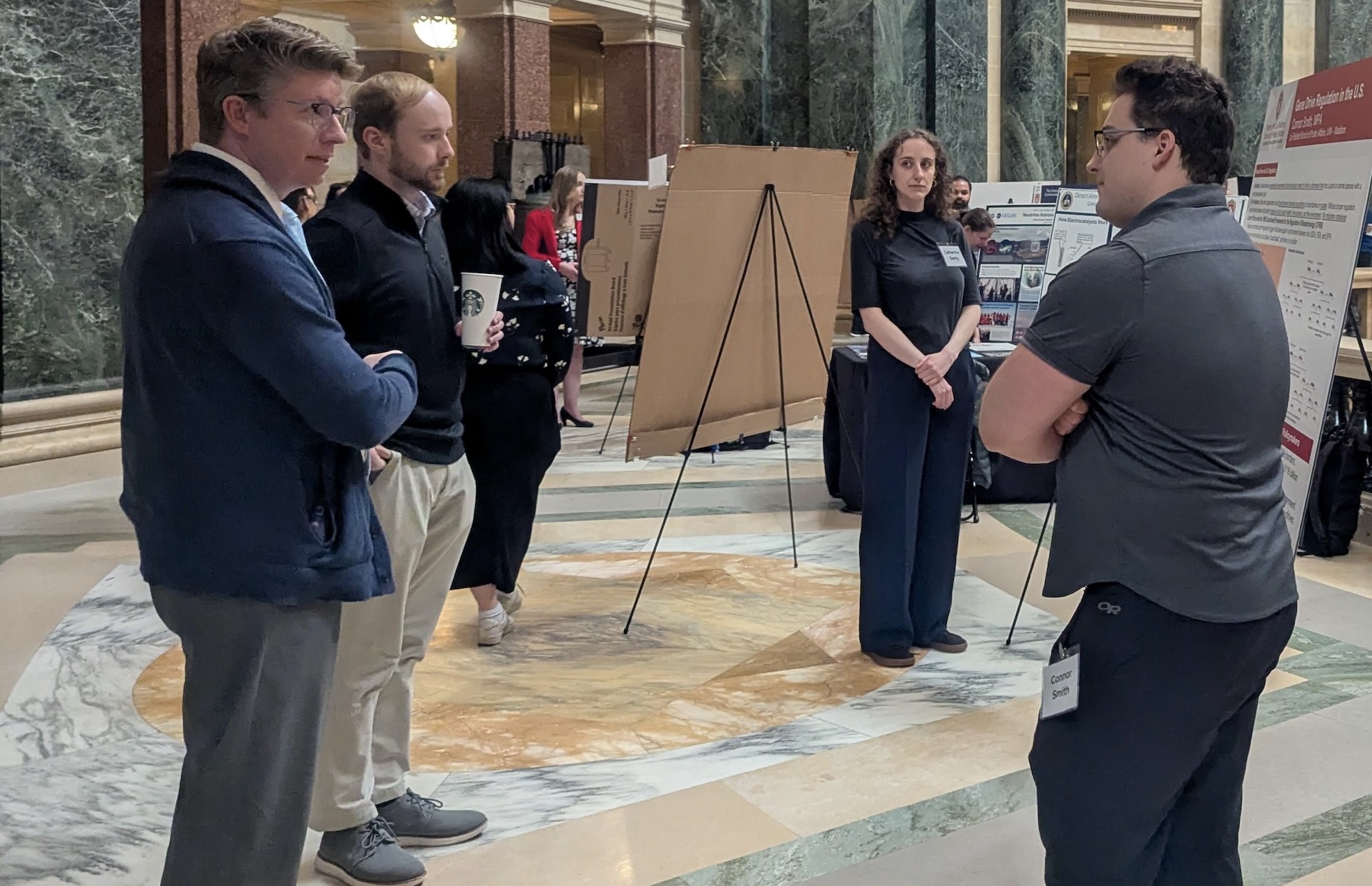
Being able to present his work at the Capitol was important, not only practically, but personally. Students gain experience interacting with legislators who make decisions about their research, building confidence in addressing questions, and defending claims.
“I’m honored to be here around so much talent, and it means everything,” Smith said. “I’m about to graduate and end my college career in the same place I decided to go into public service when I was 10 years old.”
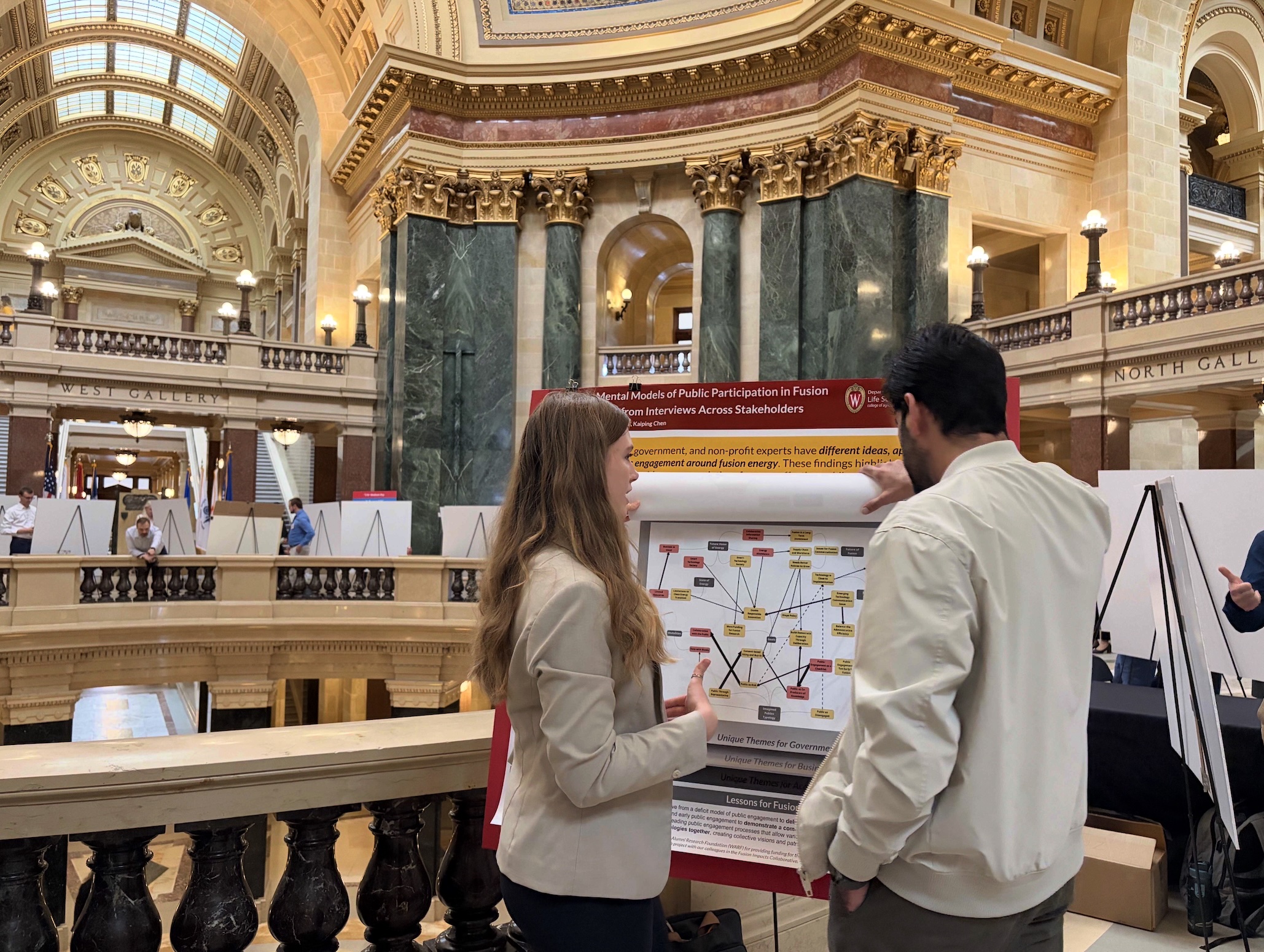
La Follette’s Jacklyn Alsbro (MPA ’26) and Life Sciences Communication PhD student Sara Ostad Rahimi and Dr. Kaiping Chen rounded out the showcase with research on one of the most consequential energy transitions of the coming decades—fusion energy. Their project, part of the Fusion Impacts Collaborative at UW–Madison with funding support from WARF, examined how different stakeholder groups think about public engagement as fusion energy moves toward commercialization.
Through 30 interviews with fusion experts globally, they found that experts across sectors tend to characterize the public as uninformed, risky and disengaged, a framing that risks creating conflicting public messaging and eroding trust before fusion facilities ever get sited.
“Wisconsin is positioned to be one of the national centers of fusion energy, making this background work urgent,” Alsbro said. “Being able to present it to the people who can make an impact on how fusion energy interacts with the public is so important.”
For La Follette, the day was a demonstration of the school’s core purpose in educating future policymakers and researchers who don’t just produce findings but know how to put them in front of the right people. From credit scores to gene drives to fusion energy, the work on display was technical, but the goal was straightforward, to inspire evidence-based policymaking from their research.
– Story by Outreach Assistant Ana Massoglia