Graduate Program Manager Mo O’Connor retires
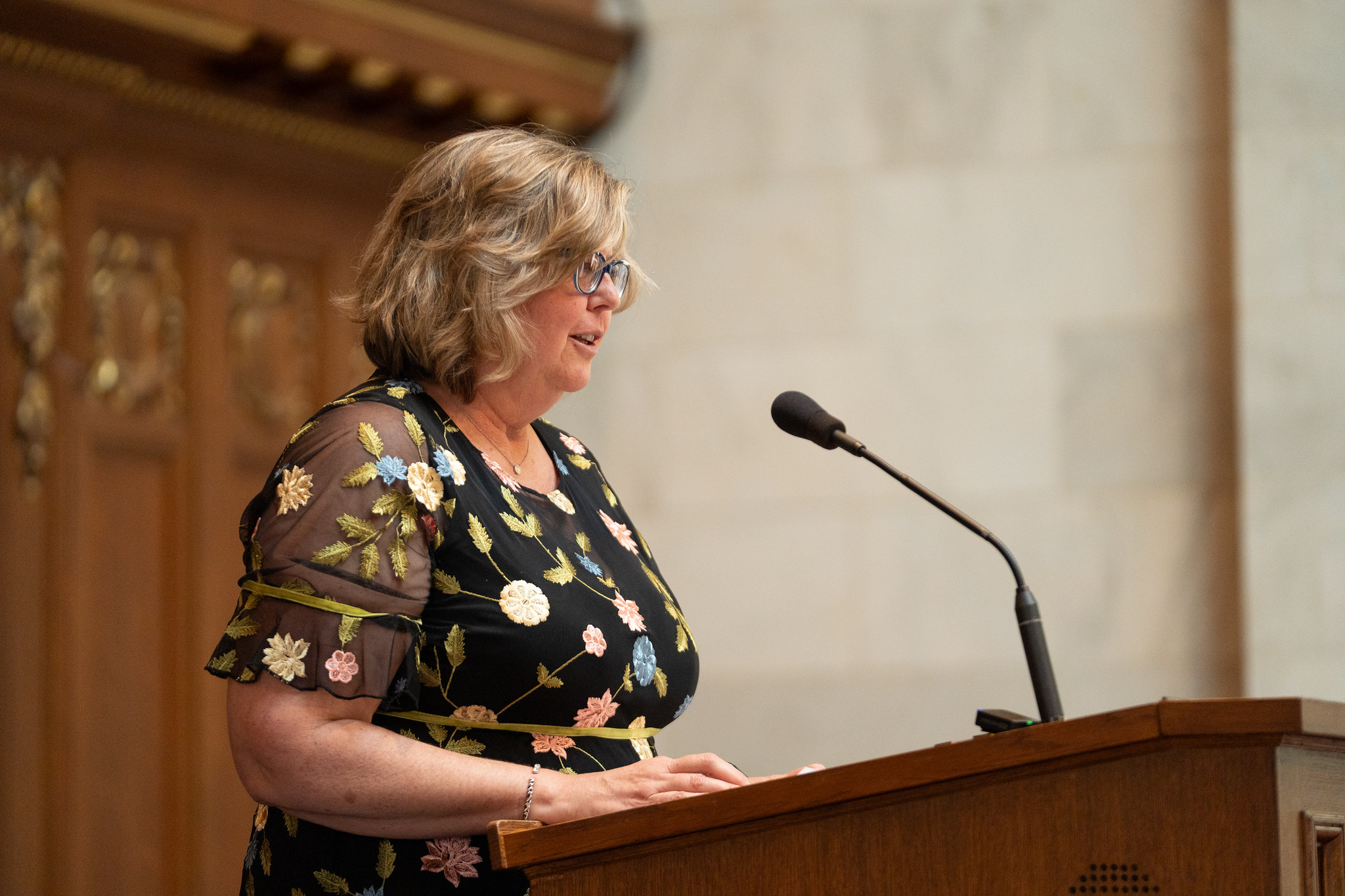
In July 2026, Graduate Program Manager Mo O’Connor retired after an impressive student-centered career that included time as a high school teacher and 25 years advising students across multiple UW–Madison departments. She joined La Follette in 2017 and advised hundreds of La Follette students during her time with the school.
Can you tell us a little bit about your career and how you arrived at La Follette?
I’ve spent most of my career at UW–Madison, working in a variety of student-facing roles across campus. Before that, I taught English at Middleton High School, which confirmed for me how much I enjoy helping students learn, grow, and figure out their next steps.
Over the years, I worked in career services, the Wisconsin School of Business, the School of Nursing, the College of Engineering, and finally the La Follette School, where I spent the last nine years of my career.
While the settings changed, the common thread was always students. I feel lucky to have spent nearly three decades helping students navigate opportunities, challenges, and transitions, and I couldn’t have imagined a better way to spend my professional life.
What are some of the accomplishments you’re most proud of?
I’ve always enjoyed building things that help students connect, feel supported, and succeed. Over the years, I created and coordinated admitting student programs, orientation experiences, group advising initiatives, peer tutoring opportunities, and online resources designed to help students navigate graduate school.
I’m especially proud of the collaborative work we did at the La Follette School to strengthen the student experience, whether through community-building activities, advising resources, website tools, or programs that helped students make sense of their academic and professional paths. The specific programs may evolve over time, but it’s rewarding to know many of those structures are still helping students today.
What will you remember most about your time working at the La Follette School?
Without question, the students.
One of the greatest privileges of my career was getting to know students as they arrived with big goals, questions, and sometimes uncertainty, and then watching them grow into confident professionals and leaders. I had the opportunity to advise hundreds of prospective students and more than 900 graduate students during my time at La Follette. Every student’s story was different, and I learned something from all of them.
What I’ll remember most are the conversations, the relationships, and the moments when a student realized they were capable of more than they thought. The fact that alumni still reach out years later means more to me than I can say. In fact, one contacted me today!
What do you hope the graduate students you’ve advised over the years remember about their time at La Follette?
I hope they remember La Follette as a place that helped them grow. I’ve often thought of graduate school as a greenhouse. It can provide support, challenge, encouragement, and the right conditions for growth, but the actual growing is something each student does for themselves. I hope their time at the La Follette School gave them the tools, confidence, and community they needed to become the people and professionals they wanted to be.
What do you hope they remember about their time with you as their advisor?
I hope they remember me as someone who believed in them and genuinely wanted them to succeed.
Since I started my career at UW–Madison in 2001, my email signature included a line from Mary Oliver’s poem The Summer Day: “Tell me, what is it you plan to do with your one wild and precious life?” I loved that reminder because it encourages us to think about purpose, possibility, and how we want to spend our time.
Mostly, I hope my students know how much I admired their commitment to making a difference in the world. They gave me reason to be hopeful about the future, and I hope they’re proud of the lives and careers they’re building.
What are you looking forward to in retirement?
So far, retirement is only a few days old, but I’m already enjoying the chance to slow down and spend more time doing things I love. That includes reading, swimming in northern Wisconsin lakes, taking my dogs for pontoon rides, hiking, and spending time with family and friends.
I’m also looking forward to returning to writing in a more intentional way. After recently downloading the poems I’ve written in my Iphone’s Notes app, I discovered I had more than 40 of them. Since earning my MFA in poetry 30 years ago, writing has often been squeezed into the spaces between work and life. Now I have the opportunity to make it part of my daily routine again, and that feels like a gift.